About us
PeaceWomen Across the Globe is an internationally active feminist peace organisation that supports women and feminist peacebuilders in contexts affected by armed conflict in their efforts to build lasting peace.

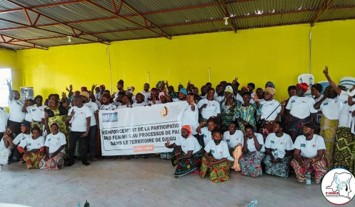
From March to May 2026, 60 women from the Lendu and Hema communities participated in training sessions as well as an inter- and several intra-community dialogues designed to strengthen women’s involvement in conflict prevention and resolution. The training activities also aimed to build a local movement of women committed to peacebuilding in Ituri province in the east of the Democratic Republic of Congo. The Lendu and Hema communities have long been fractured by tensions and insecurity.
Today, I take part in community discussions with greater confidence, and I encourage other women to promote dialogue and peace.
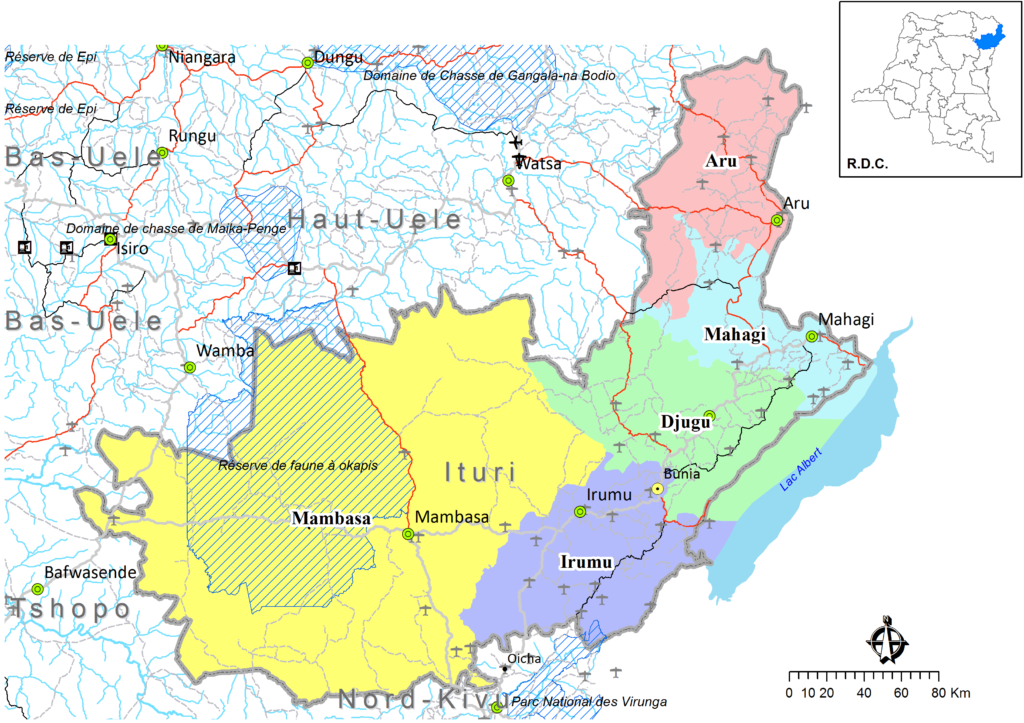
The women live in the Djugu territory, one of the most volatile conflict hotspots in Ituri province. Recurring attacks by armed groups, persistent inter-community tensions and cycles of reprisals have profoundly undermined social cohesion and caused significant displacement of the local population. Women play an essential role in community resilience: they have both access to and the trust of the conflict parties. Yet they remain largely excluded from formal and informal peace-related discussion forums. The initiative of Femmes en Actions pour le Développement Multisectoriel (FADEM) promotes women’s active participation in peace initiatives and fosters dialogue between communities.
Supported with a Feminist Peace Initiatives (FPI) grant, FADEM has trained 60 women in leadership, community mediation, conflict prevention, peaceful resolution and advocacy. The women represent groups from the Lendu and Hema communities that are particularly affected by the various ongoing armed conflicts in the Ituri province: young women leaders, displaced women or women returnees, widows, community leaders and representatives of women’s organisations.
Following these training sessions, the women organised several intra-community dialogues, which gave them the opportunity to build trust and to pave the way for a joint inter-community Hema-Lendu meeting. Steps to ensure the meetings could take place safely included minimising security risks and facilitating an open dialogue.
Preparing for such a crucial meeting is essential. In Katoto, a village inhabited by Hema, and in Loga, a Lendu village, both in the Djugu territory, tensions and mistrust were fanned by issues around security. The roots of these tensions ultimately lie in a lack of communication and interaction between the two peoples, as well as the presence of rival armed groups, Zaïre and CODECO, claiming to protect their communities. Their mutual distrust and the insecurity severely limit opportunities for meetings between them to take place.
FADEM’s past interventions and experience working with communities and armed groups in Djugu have proven effective in organising community dialogues. “Today, I take part in community discussions with greater confidence, and I encourage other women to promote dialogue and peace,” one Hema participant from Katoto said.
At the end of the project, the 60 women from the two communities met in the city of Bunia for the joint inter-community dialogue. Discussing their shared concerns openly, they were able to gradually move beyond tenacious perceptions based on community affiliations. The meeting fostered trust between the communities and allowed them to take first steps to search for solutions to the conflicts that directly affect them. The very fact that this dialogue forum took place represents a significant step forward in building peace.
Over the course of the intra- as well as the inter-community meetings, the participants’ attitudes began to shift. Some women started to distance themselves from the rhetoric and reasoning that underpins the support for their respective community’s armed groups. They spoke about dialogue, peaceful coexistence and the search for shared solutions. This shift gave the last inter-community dialogue particular significance: instead of fuelling communal divisions the women forged bonds, gained a better understanding of the other community’s concerns and positioned themselves more firmly as agents of peace.
A community leader said: “We have observed a more active involvement of women in community exchanges. Their participation strengthens efforts at dialogue and helps to foster a climate of trust between the communities.”
The growing rapprochement led to one of the most significant results: the Hema community’s gradual reopening of the Katoto road. The road is the most direct connection between the two communities. It had fallen into disuse due to the inter-community tensions. For the first time in months, members of the Lendu community were allowed to use it again and pass through Katoto, thereby avoiding lengthy detours to reach places beyond Katoto. The reopening of the road is of practical importance for people’s mobility and for market access. As significant is the symbolism of the flow of traffic for the gradual restoration of trust and peaceful coexistence between the communities of Djugu.
Building on the momentum created during the meetings, a local committee representing both communities was established soon after the inter-community meeting. FADEM supports a group of capable and confident women in their efforts to reduce local tensions, which are often exploited by armed groups. The bonds forged among the participants will keep dialogue and peacebuilding alive, even after this FPI-funded project has come to an end.
PeaceWomen Across the Globe is an internationally active feminist peace organisation that supports women and feminist peacebuilders in contexts affected by armed conflict in their efforts to build lasting peace.
Our programme in Sudan connects peace activists in the south of Sudan with Sudanese activists who live in exile and promotes developing the skills these women can use to participate fully and meaningfully in peace negotiations and to drive social change.

In online training sessions, Afghan women peace activists strengthened their peacebuilding skills and built a network across several provinces of Afghanistan. We supported these training sessions as part of our Feminist Peace Initiatives.

At the first regional meeting of the Feminists Connecting for Peace network in Africa, participants discussed the obstacles that hinder the work of women peace activists and prevent their participation in peace processes.
