Podcast with Ruth-Gaby Vermot-Mangold
"1000 women for the Nobel Peace Prize", Ruth-Gaby Vermot-Mangold, president and founder PeaceWomen Across the Globe (German, English)
"1000 women for the Nobel Peace Prize", Ruth-Gaby Vermot-Mangold, president and founder PeaceWomen Across the Globe (German, English)
Interview with Ruth-Gaby Vermot-Mangold
15 years ago, Ruth-Gaby Vermot-Mangold together with an international team nominated 1000 women for the Nobel Peace Prize. In an unprecedented initiative, they searched the world for women working for peace and justice. On the occasion of its anniversary we interviewed Ruth-Gaby Vermot-Mangold, initiator and co-president of PeaceWomen Across the Globe, about the decisive moments of the project.
Women demand participation in transitional justice
Women continue to live with the complex effects of the ten-year armed conflict that ended with a peace agreement in 2006. Yet, they were effectively excluded from the peace negotiations and their participation in transitional justice processes remains severely restricted. With our programme, we strengthen the agency of women and young people affected by the conflict and enable their access to political decision-makers so that they can hold the government accountable to deal finally with the violent past and its consequences.
A proven instrument for women's participation
From 2015 to 2025, we supported our local partners in organising Women’s Peace Tables with the aim of strengthening women's participation in peace processes and making their peace work visible. These proved to be an effective tool for achieving these objectives.
Transregional learning exchange in the Philippines
It was a unique exchange that we were able to organise with our partners in the Philippines in December: at various events, two representatives of the Gender Working Group of the Colombian Truth Commission exchanged their experiences with peace activists from the Philippines. Many moments of recognition and understanding emerged at during these exchanges. Our programme managers Andrea Filippi and Karin Widmer were there.
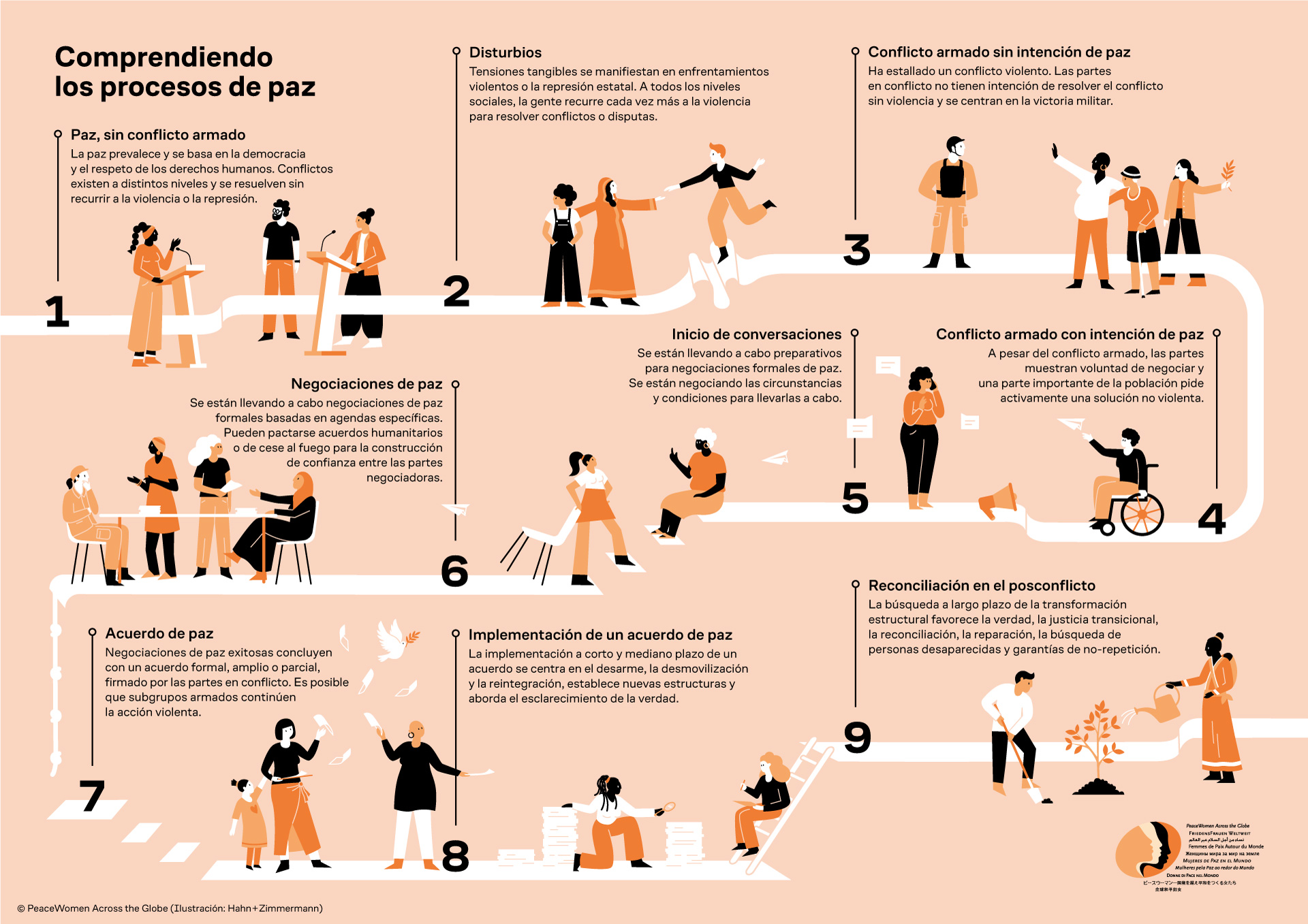
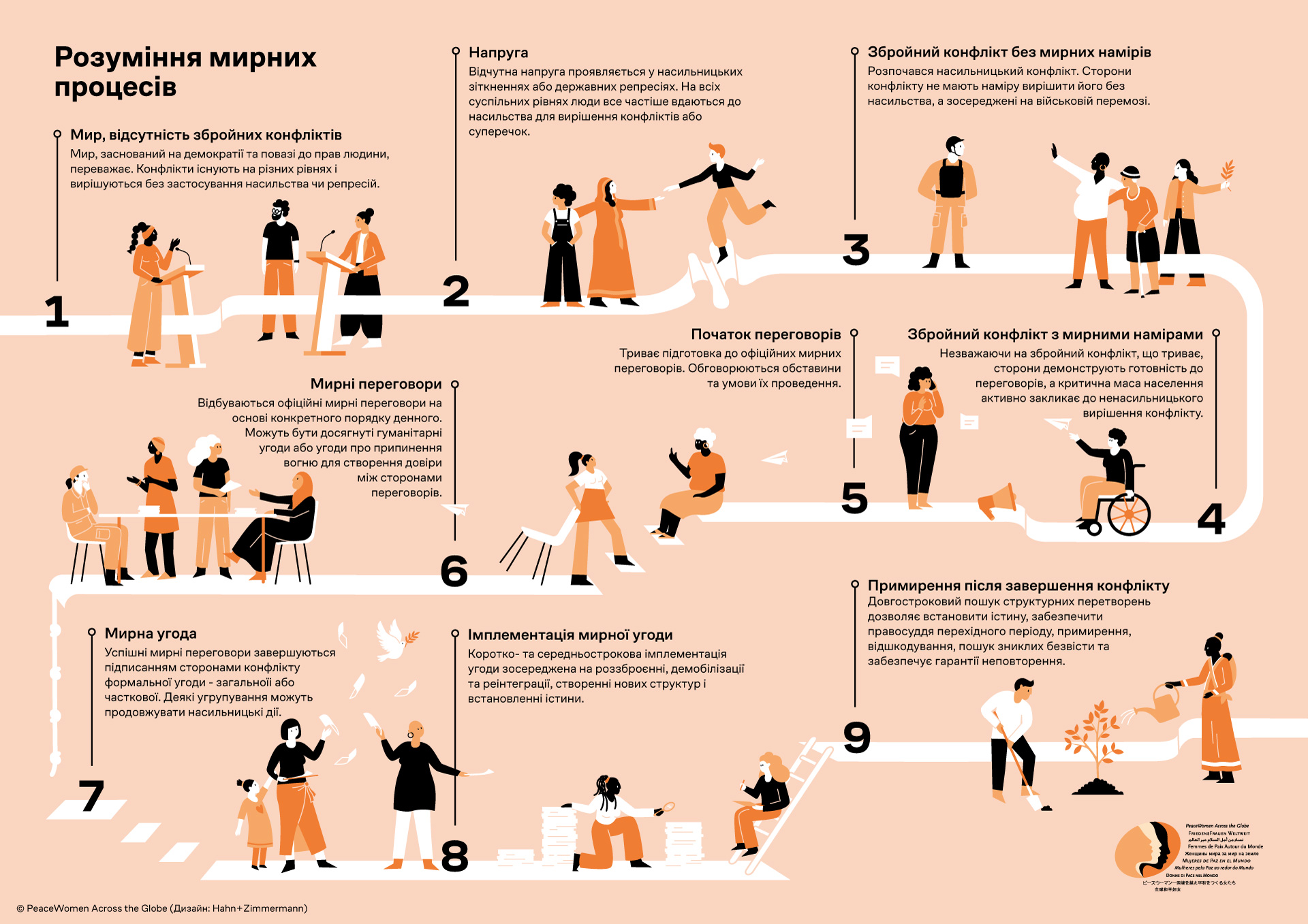
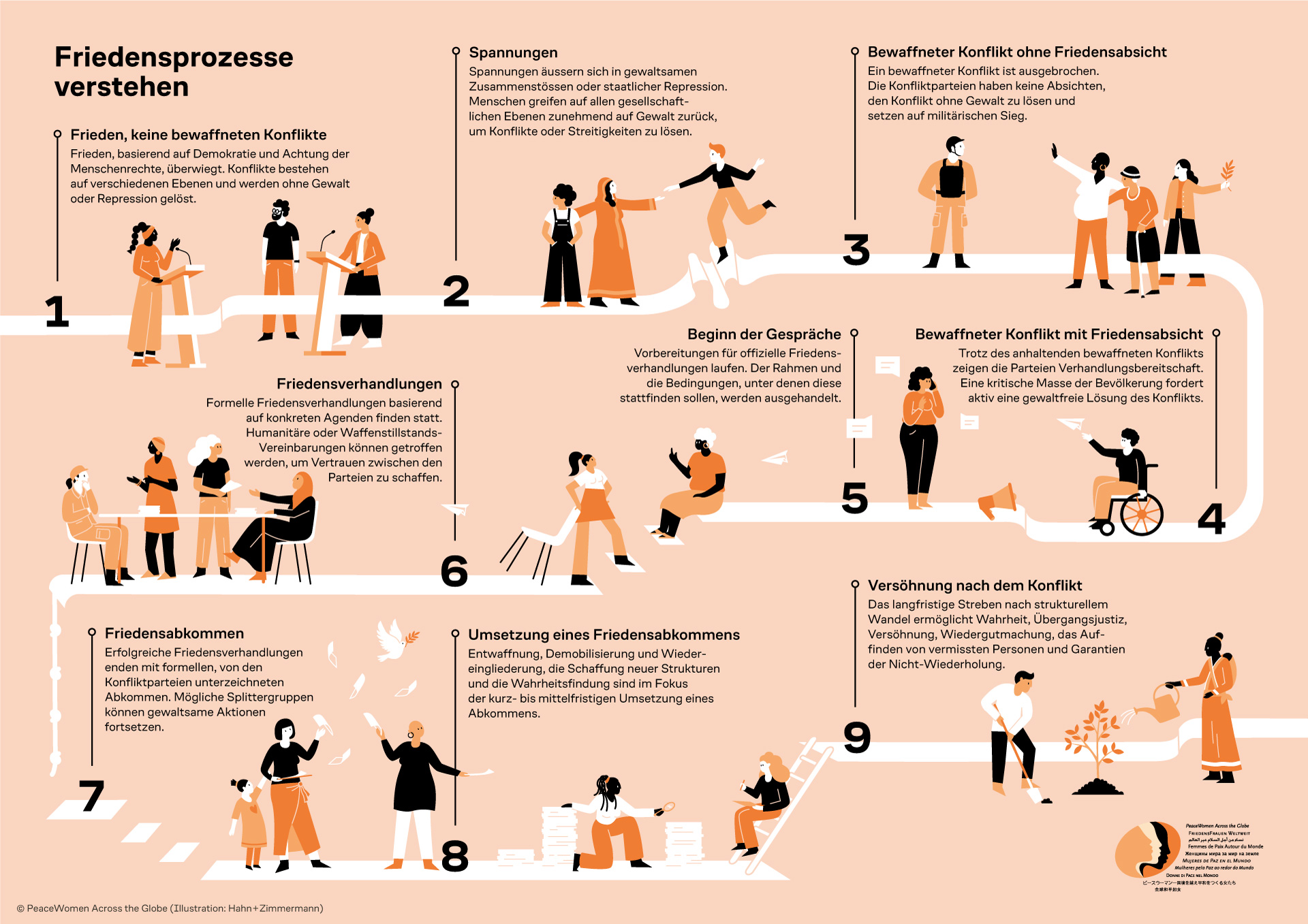
What images do the words "peace processes" evoke in your mind? Do you imagine years of negotiations culminating in a ceremony where the parties to the conflict sign an agreement, followed by a photo of the handshake that goes around the world? We have scrutinised and deconstructed this common image and taken an in-depth look at peace processes, as well as the question: "How do women influence peace processes?" The result of this work is a graphic representation of the different stages of peace processes. With this tool, we want to focus on the role women play and where they exert influence to drive peace processes and prevent setbacks.
Continuing to invest in the future of women
In the 20 years before the Taliban came to power in August 2021, women in Afghanistan had been able, with difficulty, to reclaim some of their rights and their place in society. Until the takeover, we supported women to increase their knowledge about their rights in relation to the peace process at the time, so that they could help shape peace and have a voice in decision-making processes. (The programme has concluded.)
Making UN Resolution 1325 a lived reality
The landmark UN Security Council Resolution 1325 on Women, Peace and Security (WPS) was passed in 2000. In the 25 years since then, more than 110 countries have adopted a National Action Plan for the implementation of the resolution, highlighting the potential of the WPS agenda as an instrument for transformative change.
In our range of multimedia products you can listen to human rights and women's rights activists talk about their lives and work. You can also learn more about our and our partners’ projects and events.
"Truth and gender in the Colombian peace process", "La verdad y el género en el proceso de paz colombiano": Alejandra Miller Restrepo, member of our Board and member of the Colombian Truth Commission, Colombia (English, Spanish)
"Justice and peace for Afghanistan", Sima Samar, member of our Board and women’s rights and human rights defender, Afghanistan
"Building peace across the divide", Susan Risal, executive director, Nagarik Aawaz, our partner organisation in Nepal
"Bringing peace to Mindanao": Yasmin Busran-Lao, former member of the Philippine government's peace negotiation panel for talks with the Moro Islamic Liberation Front
Compact, interesting and relevant: in our printed and electronic newsletters, you can find out about our events and projects and our political activities in Switzerland and abroad.
News
The peace negotiations between the Taliban and the Afghan government have been ongoing since September 2020, with only four women on the 21-member government negotiation team and none among the Taliban negotiators. We ask Sima Samar, founder of the Afghanistan Independent Human Rights Commission and of Gawharshad University in Kabul, what the chances are for lasting peace.
News
What images does the word "peace process" conjure up for you? You probably imagine years of negotiations, a ceremony at which the parties to the conflict sign an agreement and shake hands? We have deconstructed this common image and taken an in-depth look at the question: "How do women influence peace processes?" The result is a graphic representation of the different stages of peace processes. With this tool, we put the role of women centre stage and show where they exert influence to drive peace processes and prevent setbacks.
News
International support for peace in Colombia must not waver, warns human rights lawyer Luz Marina Monzón Cifuentes in an interview with swissinfo. What is needed now is a peace policy that focuses on the small communities caught up in the violence. In April, we invited Luz Marina to an event in Bern.