PeaceWomen Across the Globe is an internationally active feminist peace organisation based in Bern and Geneva and with an office in Colombia. We support women and feminist peacebuilders in contexts affected by armed conflict in their diverse efforts to build lasting peace. To ensure their full, equal and meaningful participation in all stages of peace processes, we amplify their visions and demands, boost their efforts to shape peace processes and connect women and feminist peacebuilders within conflict-affected countries and across regions impacted by armed conflict.
Our teams in Bern (International Office) and in Bogotá (Colombia Office) support our local partners in designing peacebuilding programmes in various contexts and at different stages of peace processes, namely peacebuilding during armed conflict, peacebuilding during peace negotiations and peacebuilding after armed conflict.
Our programmes create spaces where women can develop and advance their diverse efforts to achieve lasting peace. Our goal is the full, equal, meaningful and safe participation of women in all phases of peace processes. Together with them, we advocate for a feminist understanding of peace that questions power relations and strives for transformative change.
We have been working in Colombia since 2016 with our Peacebuilding After Armed Conflict programme. Since the signing of the peace agreement between the Colombian government and the FARC-EP guerrilla group, we have been advocating for the participation of women affected by the conflict in its implementation. In our Peacebuilding During Peace Negotiations programme, launched in 2025, we are also committed to ensuring that women participate in ongoing, locally rooted peace negotiations. Women and women's organisations must be equally represented at negotiations with local armed groups.
As part of a pilot programme in Sudan, we are connecting peace activists in the Dilling region in the south of Sudan with Sudanese activists who have lived in exile since 2023 due to the ongoing violence. Together with our local partner, we promote the targeted development of skills that these women can use to participate fully and meaningfully in peace negotiations and drive social change.
Fostering connections and exchange among women and feminist peacebuilders from countries affected by violent conflict is a central aim across all our programmes. To advance this goal, we invited two Sudanese and two Colombian peace activists to Switzerland. Over four days they shared experiences, strategies and approaches to feminist peacebuilding. They also met with decision-makers to highlight the challenges faced by women peace activists, particularly young ones, in their respective countries – and to voice their expectations.
With Resolution 1325 on Women, Peace and Security, the UN Security Council passed a milestone in feminist peace and security policy in October 2000, marking the launch of the Women, Peace and Security (WPS) agenda. The WPS agenda lies at the core of our work across our programmes, in our advocacy and in our work with our global network Feminists Connecting for Peace.
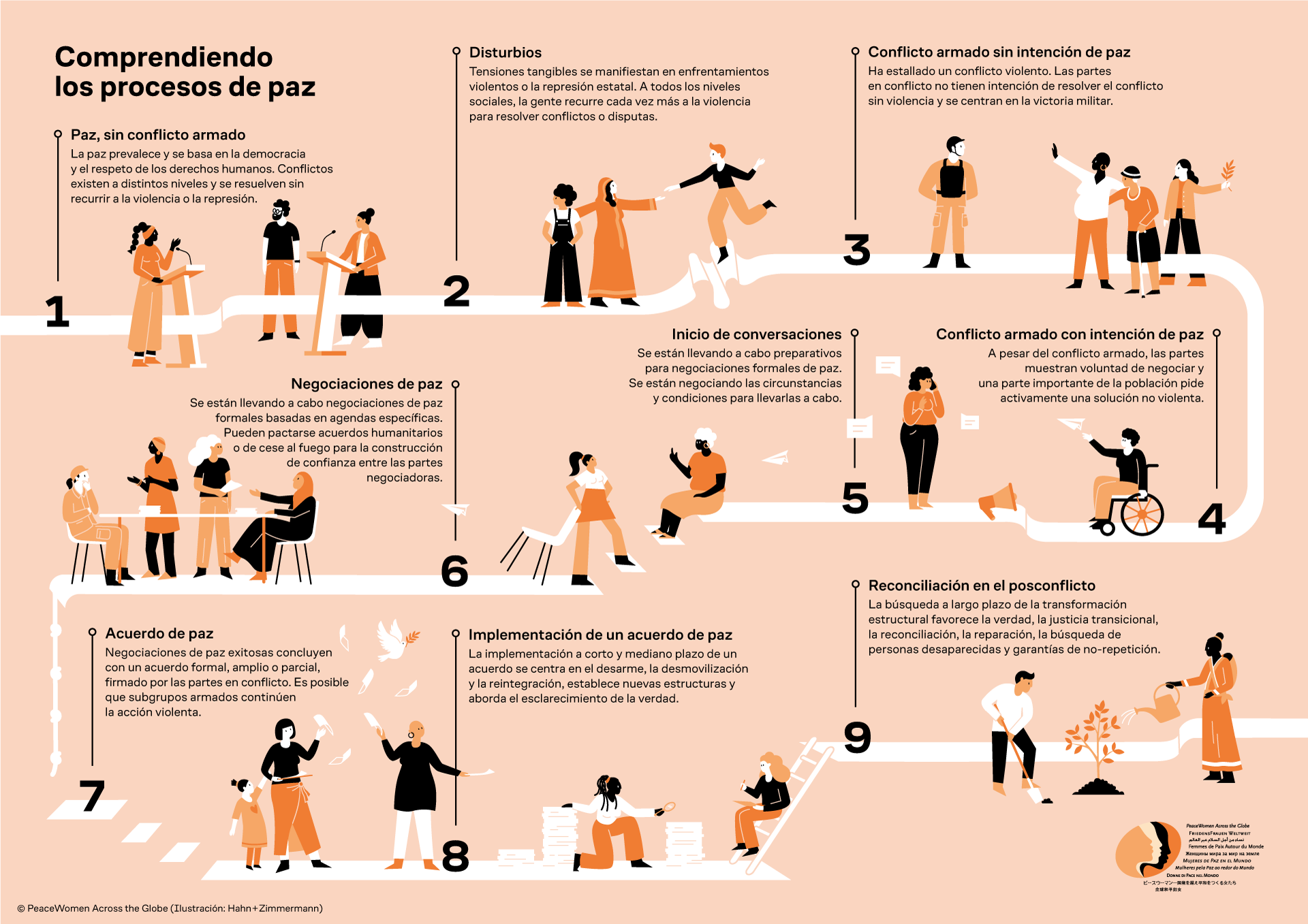
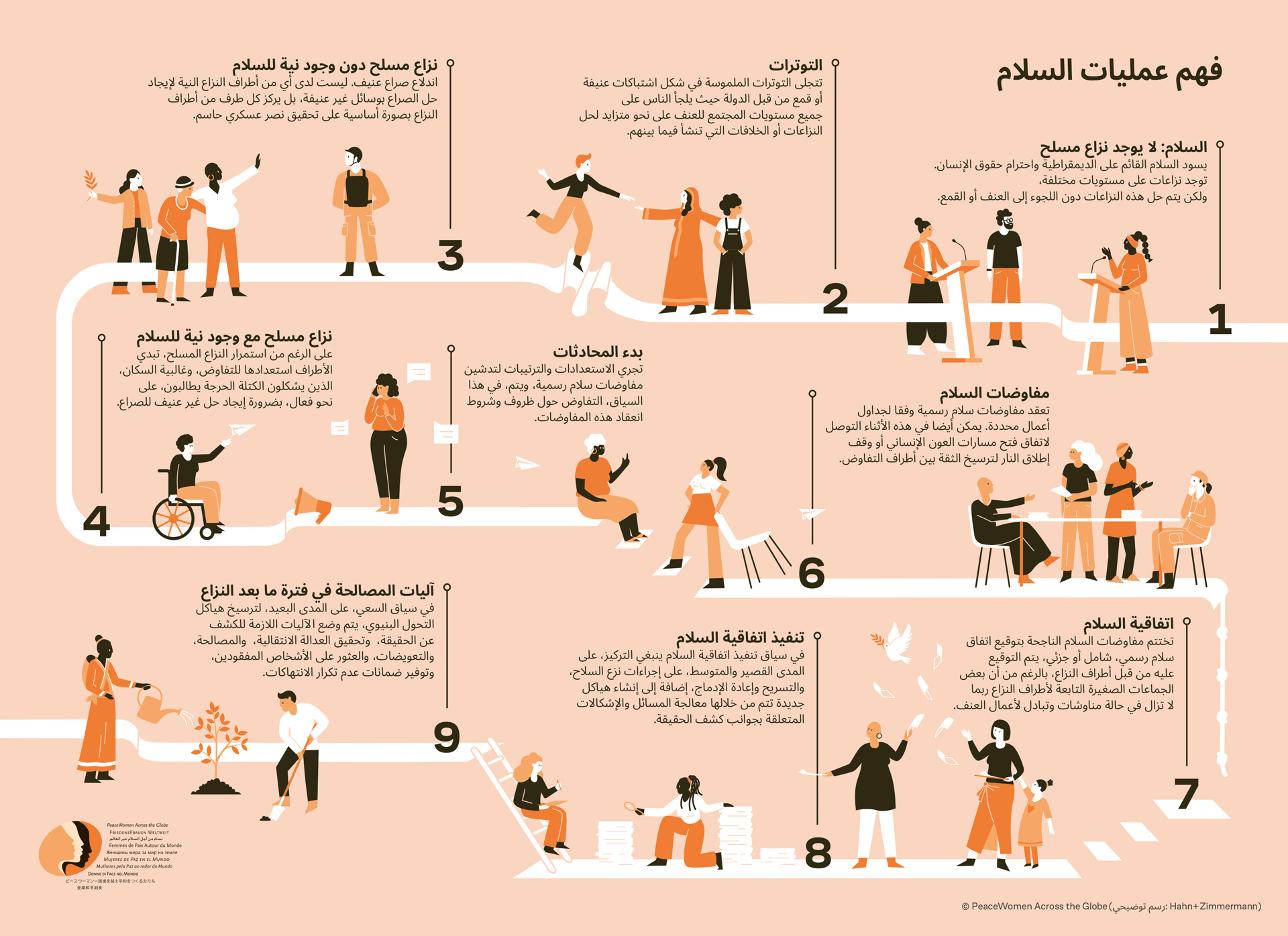
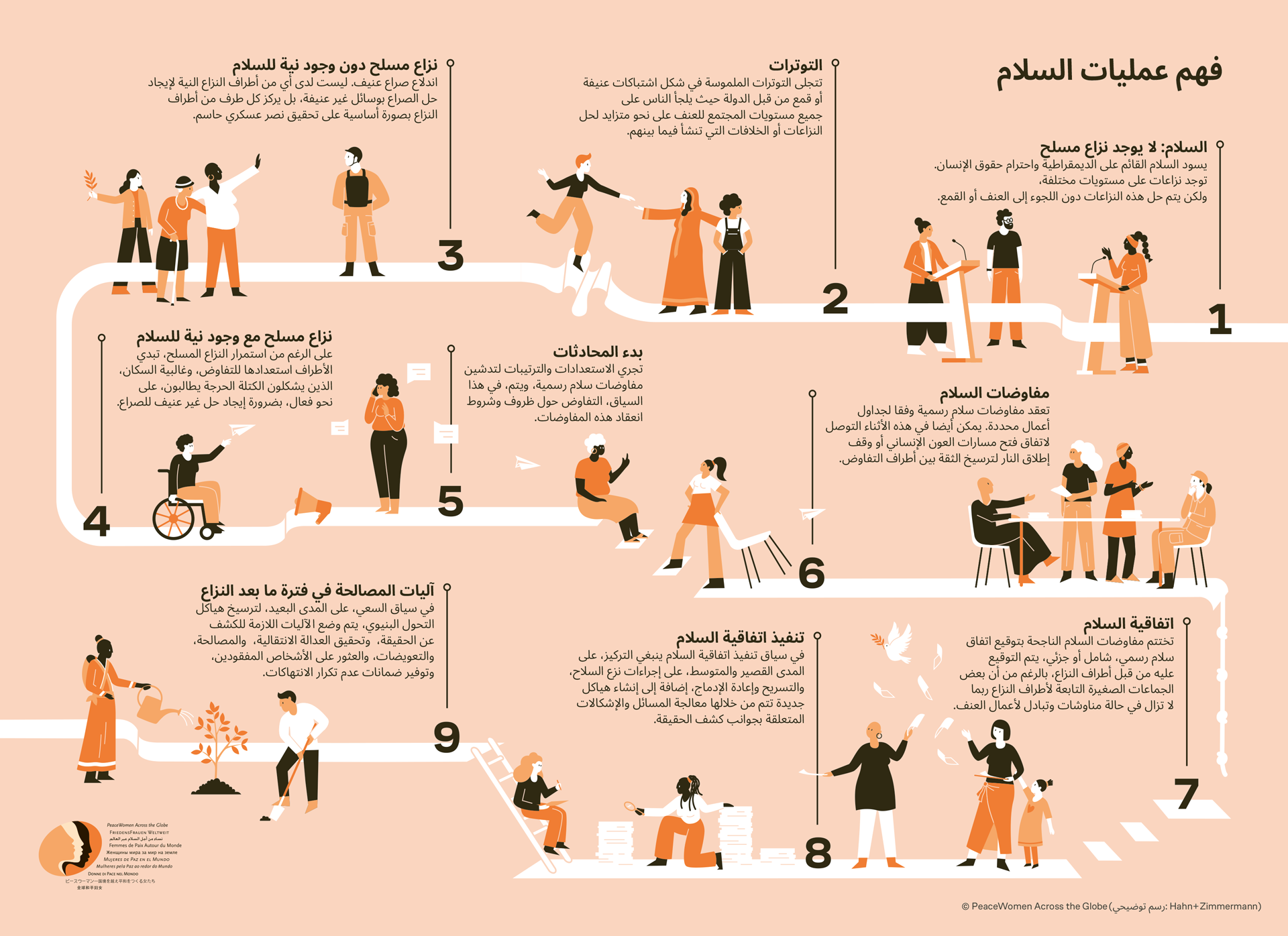
What images do the words "peace processes" evoke in your mind? Do you imagine years of negotiations culminating in a ceremony where the parties to the conflict sign an agreement, followed by a photo of the handshake that goes around the world? We questioned and deconstructed this common perception and took an in-depth look at peace processes focusing on the question: "How do women influence peace processes?’"
Negotiations for a ceasefire in Sudan began in Geneva in mid-August. Fifteen Sudanese women also travelled there to demand to be part of the peace processes. In the swissinfo article, Rabab Baldo from our network and our director Deborah Schibler share their insights.
International support for peace in Colombia must not waver, warns human rights lawyer Luz Marina Monzón Cifuentes in an interview with swissinfo. What is needed now is a peace policy that focuses on the small communities caught up in the violence. In April, we invited Luz Marina to an event in Bern.
Undoubtedly the world is experiencing a phase of radical change and uncertainty. The year 2025 has shown how negatively these developments impact feminist peacebuilding. In the annual report, you can find out how we and our partners are dealing with this.