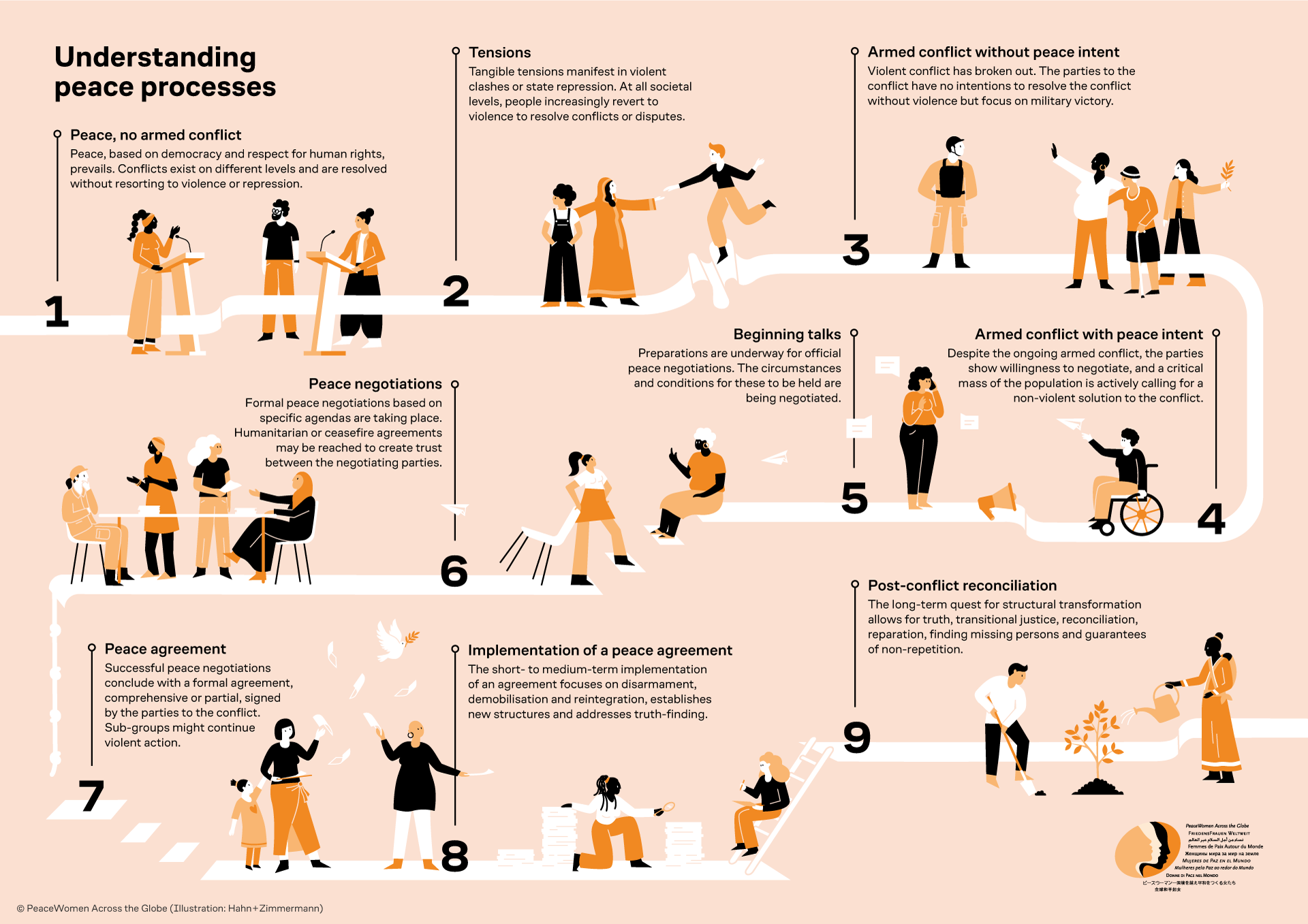
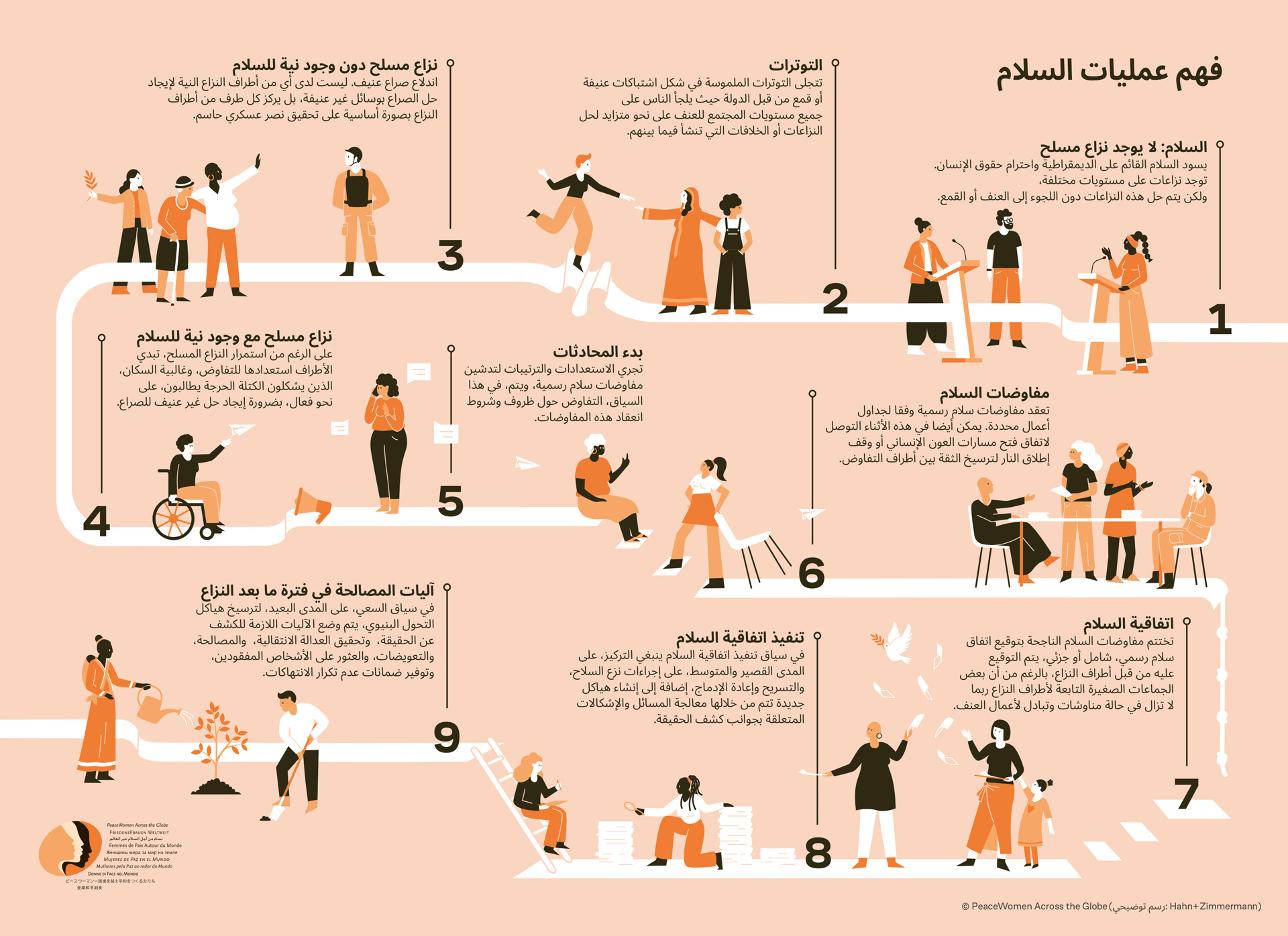
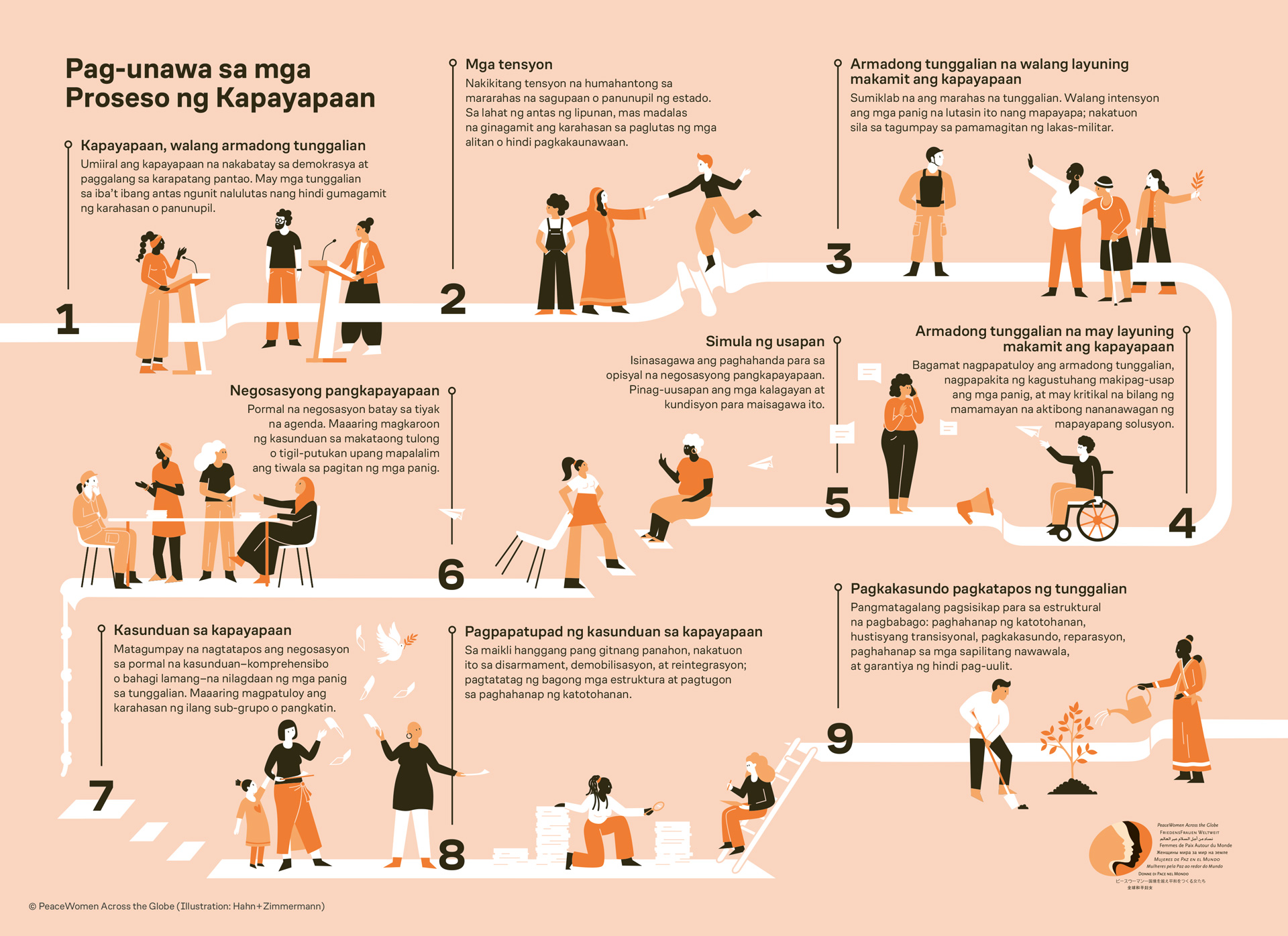
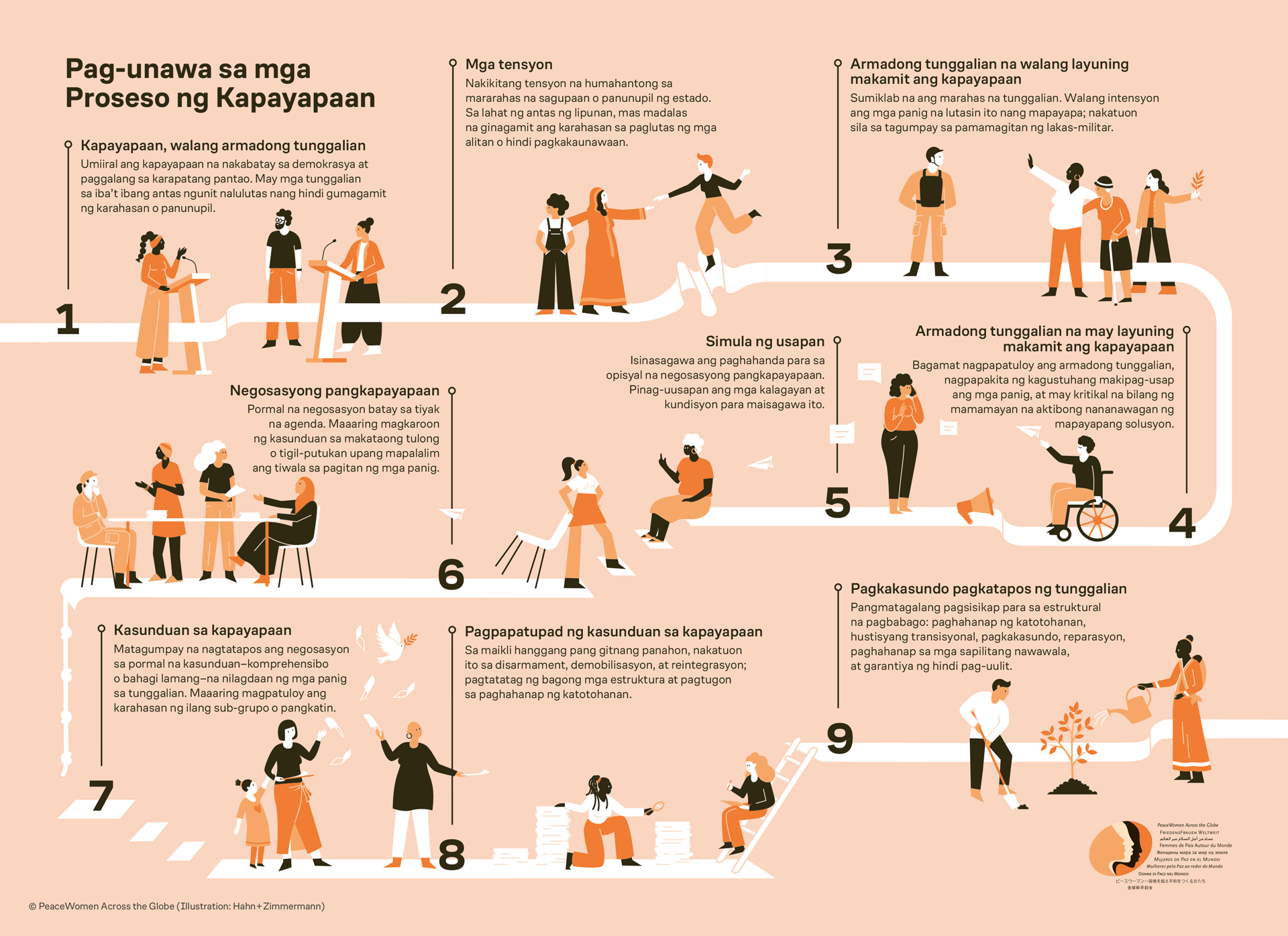
What images do the words "peace processes" evoke in your mind? Do you imagine years of negotiations culminating in a ceremony where the parties to the conflict sign an agreement, followed by a photo of the handshake that goes around the world? We questioned and deconstructed this common perception and took an in-depth look at peace processes focusing on the question: "How do women influence peace processes?’"
Militarisation means more than "just" spending on armed forces: this spending is the consequence of a security policy geared towards war. As a feminist peace organisation, we oppose the claim that more weapons lead to more security. We demand demilitarisation and disarmament because that is the only way to achieve genuine peace and comprehensive security.
More than 2,700 billion US Dollars. That is the global military expenditure in 2024. It marks the steepest rise in such spending since 1988. This stark figure underscores a world increasingly reliant on military solutions to achieve security. In sharp contrast: PeaceWomen Across the Globe firmly stands for non-violent conflict transformation. We believe that lasting security can only be achieved through inclusive dialogue and not through weapons or military deterrence.
In the magazine Fem*Fém, our colleagues Liv Halperin and Camille Bernheim write about promoting creative agency, maintaining peacebuilding and leveraging political opportunities as crucial factors for creating a peaceful society after armed conflict in their article “Sustaining peacebuilding efforts in post-armed conflict settings”. The multilingual magazine Fem*Fém is published by the Association for Feminist Science in Switzerland FemWiss.
In this special edition of our newsletter, you can find out which stages peace processes go through and where and how women exert influence in order to drive peace processes and prevent setbacks. We have added an extra, detachable double page so that you can use the graphic illustration of peace processes and the accompanying text yourself. You will also find out how our partner in Nepal is helping to ensure that the generations affected by war are heard and recognised as victims of war violence through intergenerational Women's Peace Tables. The meeting with peace activists from our Feminists Connecting for Peace network, which took place in Bern at the beginning of the year, is another focus of our newsletter.